Risks of Updating the SKU Value in Shopify and Its Impact on ShipHero
Last updated: June 2, 2026
Within the Shopify × ShipHero integration, the SKU is the primary identifier that maps products between the two systems. If a SKU is updated in Shopify, one of two outcomes may occur:
A new product record is created in ShipHero with the updated SKU, leaving the old ShipHero product disconnected.
The existing product in ShipHero is updated with the new SKU.
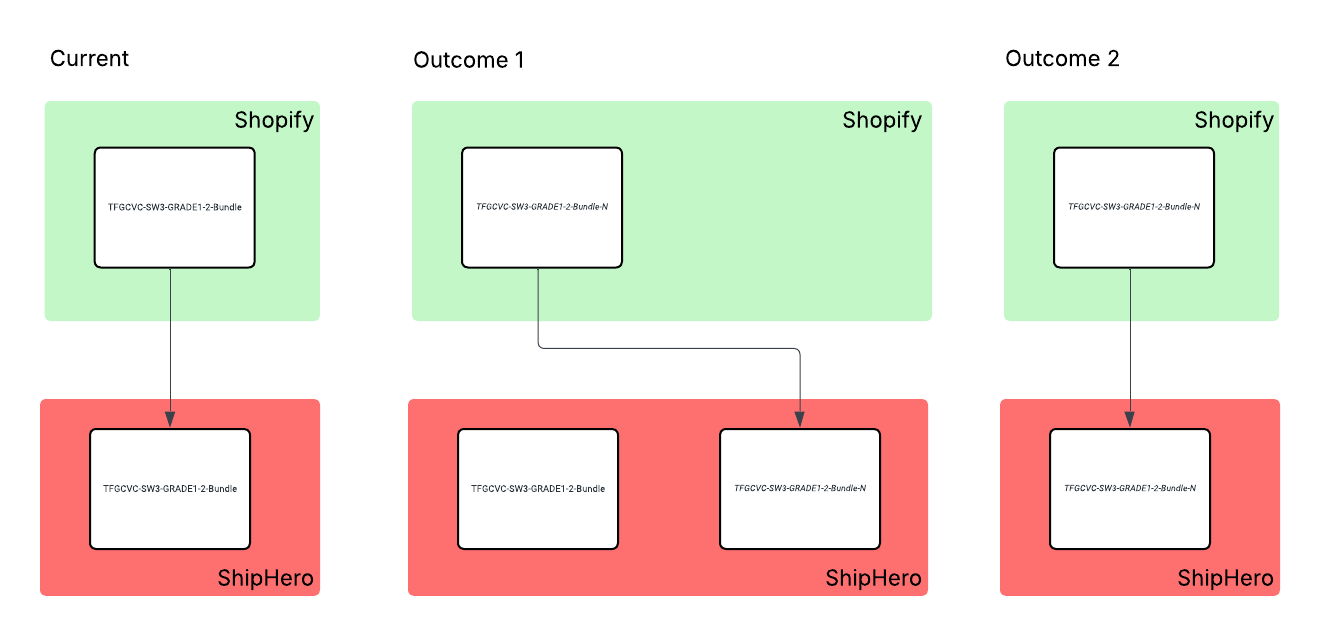
What Does This Mean?
Inventory Mismatch: Inventory may no longer be tied to the correct SKU in ShipHero. This can cause order delays, isolated inventory that is not listed in Shopify, or situations where Shopify displays stock for an item that has no inventory leading to overselling.
Order Fulfillment Issues: Because SKUs are tied to order line items, updating them in Shopify can retroactively update existing orders in ShipHero, especially impacting pre-sold orders. This may cause ShipHero to no longer recognize the items, requiring manual intervention to resolve and delaying fulfillment.
Broken Kit Logic: Kits and bundles rely on SKU mappings. Updating SKUs without adjusting these mappings can break kit logic, resulting in incomplete or incorrect order kits.
Fragmented Reporting: Sales history, reporting, and performance analytics in ShipHero are tied to SKU values. Changing SKUs can fragment this data, making it difficult to track product performance over time.
Returns & RMAs: Returns or RMA processes that rely on SKU lookups may fail if the SKU has changed, creating additional handling work and potential delays. Additionally, inventory may be received against a not active SKU.
Automation Failures: Any automations or workflows (e.g., rules, integrations, or return flows) that depend on SKU values will break when those values change, disrupting downstream processes.